🌆 Casablanca City Guide · Updated 2026 · ⚽ FIFA 2030 Final Host
Things to Do in Casablanca (2026)
The 15 best things to do in Casablanca — from the world's most spectacular mosque to the FIFA 2030 Final venue. Morocco's modern capital deserves more than a stopover.
One of the world's most breathtaking religious buildings — a mosque built over the Atlantic Ocean, its minaret rising 210 metres (the world's tallest). The prayer hall holds 25,000 worshippers; another 80,000 can pray on the esplanade. Non-Muslims can visit on guided tours that reveal the stunning hand-carved cedar, zellige floors, and the retractable roof. Don't miss the ablution hall beneath the mosque.
💡 Tip:
Book tickets in advance — tours sell out, especially on weekends. Photography is allowed on the esplanade and during tours. Come at sunset when the marble glows gold against the Atlantic.
Casablanca's compact Old Medina is quieter and more relaxed than Marrakech or Fez — a genuine working neighbourhood with food stalls, spice markets, and traditional crafts rather than tourist souvenir shops. The clock tower (Tour de l'Horloge), the old ramparts, and the Central Market (Marché Central) are the highlights.
💡 Tip:
The Central Market fish stalls open early and close by noon — great for seafood lunch at one of the stalls. The medina is compact enough to explore without a guide. Less hassle than Marrakech.
Casablanca's 7km oceanfront promenade stretches past beach clubs, restaurants, and cafes along the Atlantic shore. The Ain Diab neighbourhood at the western end has Casablanca's most popular beach clubs with pools, watersports, and seafood restaurants. The Corniche is the city's living room — packed with families at weekends.
💡 Tip:
The beach clubs (Tahiti, Lido, Miami) charge entry but include pool and sunbed access. Go on a weekday to avoid crowds. The sunsets from the Corniche facing the Atlantic are spectacular year-round.
🕐 All day; evenings lively
🕌
4. Art Deco Quarter
Quartier des Habous (New Medina)
💰 Free to explore⏱ 1–1.5 hours
Built by the French Protectorate in the 1930s, the Habous Quarter blends traditional Moroccan architecture with Art Deco detailing — wide arcaded streets, ornate facades, and a central square flanked by the Mahkama du Pacha (ornate courthouse open to visitors) and the Royal Palace walls. The covered souks sell quality artisanal goods: pastries, spices, copper, leather bookbinding.
💡 Tip:
Buy msemen pastry and honey from the bakeries around the main square. The Mahkama du Pacha interior (request to enter at the door) has extraordinary carved cedarwood detailing. Far less touristy than Marrakech's souk.
🕐 Shops 9am–7pm; closed Fri afternoon
🏛️
5. Urban Landmark
Mohammed V Square
💰 Free⏱ 30 minutes
The historic heart of downtown Casablanca — a grand French colonial square built in the 1930s, ringed by the Palais de Justice, Prefecture, Bank Al Maghrib, and the French Consulate. Fountains at the centre, shade trees, Art Deco facades. The square connects to the pedestrianised Boulevard Mohammed V — Casablanca's answer to the Champs-Élysées, lined with 1930s arcaded buildings.
💡 Tip:
Walk the full length of Boulevard Mohammed V for the best Art Deco architecture. The side streets off the boulevard still have intact Mauresque-Art Deco storefronts. Best light for photography in early morning.
A loving recreation of the fictional café from the 1942 film Casablanca — complete with riad courtyard, piano bar, Art Deco furnishings, and a pianist playing 'As Time Goes By'. It's absolutely a tourist attraction, but it does it beautifully. The Moroccan-international menu is genuinely good. Book ahead — always full.
💡 Tip:
Reserve a table at least 2–3 days ahead. Friday and Saturday evenings fill fastest. The cocktails are excellent. Ask the pianist to play 'As Time Goes By' — they will, and the moment is worth it.
The only Jewish museum in the Arab world — a remarkable institution documenting Morocco's 2,000-year Jewish community, the world's most vibrant Jewish diaspora culture outside Israel. The collection includes synagogue furnishings, historical photos, costumes, and documents. Casablanca once had a Jewish population of 80,000. Located in the Casablanca suburb of Oasis.
💡 Tip:
A genuinely important and moving museum — not just for Jewish visitors. Morocco's relationship with its Jewish heritage is unique and this museum explains it compellingly. Taxi from the centre costs about 25–30 MAD.
🕐 Mon–Fri 10am–6pm, Sun 10am–2pm
🎨
8. Contemporary Art
Villa des Arts Casablanca
💰 Free⏱ 45–60 minutes
A stunning 1930s Art Deco villa converted into Morocco's premier contemporary art gallery — rotating exhibitions of Moroccan and international art in a beautiful building with Andalusian garden. The permanent collection includes works by the major figures of Moroccan modernism (Cherkaoui, Belkahia, Melehi).
💡 Tip:
Free admission makes this an easy add-on. The garden café is pleasant for coffee. Check their website for special exhibitions — often free opening events on Thursdays.
🕐 Tue–Sat 9am–7pm, Sun 9am–1pm
⚽
9. FIFA 2030 Venue
Grand Stade Hassan II
💰 Match tickets TBA⏱ 3+ hours on match day
The world's largest football stadium — 115,000 capacity, designed to resemble a traditional Moroccan tent with a retractable roof. The venue for the FIFA World Cup 2030 Final. Located 30km from central Casablanca in the Benslimane area, connected by high-speed TGV rail (15 minutes). The surrounding development includes hotels, transport hub, and fan zones.
💡 Tip:
High-speed TGV trains will connect Casa-Voyageurs station directly to the stadium in 15 minutes. Book accommodation in Casablanca or Benslimane for match days — hotels nearest the stadium are already filling up for 2030.
🕐 Opening 2028 — pre-match stadium tours TBA
🐟
10. Food Market
Marché Central (Central Market)
💰 Free entry; seafood from 80–150 MAD/kg⏱ 45–60 minutes
Casablanca's covered central market — the fish section is the unmissable highlight. Atlantic seafood arrives fresh daily: dorade, sole, sea bass, sardines, prawns, octopus, and lobster. Pick your fish and have it grilled at one of the stalls around the market perimeter. One of Morocco's finest fresh seafood experiences.
💡 Tip:
Arrive before 10am for the freshest selection. Point to the fish you want, agree a price per kilo, and choose your cooking style. The grilled sea bream with chermoula is exceptional. Bring cash — most stalls don't take cards.
🕐 Mon–Sat 6am–1pm
🛍️
11. Shopping
Morocco Mall & Anfa Place
💰 Free entry; shops vary⏱ 2–3 hours
Morocco Mall on the Corniche is Africa's largest shopping centre — 350+ stores, an aquarium, IMAX cinema, ice rink, and food court. More interesting architecturally is Anfa Place, a newer mall designed around a central atrium with Atlantic views. Both are air-conditioned havens in summer. Morocco Mall's Galeries Lafayette is excellent for Moroccan fashion brands.
💡 Tip:
Morocco Mall's aquarium (extra cost) is excellent for families with children. The food court has good Moroccan fast food options. Anfa Place is less crowded and more upmarket — better for browsing.
🕐 10am–10pm daily
⛪
12. Architecture
Sacré-Cœur Cultural Centre
💰 Free (exterior)⏱ 20–30 minutes
A dramatic 1930s neo-Gothic Catholic cathedral — now deconsecrated and used as a cultural centre — that rises unexpectedly from the Maarif district. The twin towers are a distinctive Casablanca landmark. The building's Moorish-Gothic hybrid architecture is unusual and photogenic.
💡 Tip:
Worth seeing on a walking tour of the Maarif neighbourhood. Combine with a walk along the Art Deco boulevards nearby. The best exteror views are from the Boulevard Brahim Roudani side.
🕐 Exterior always accessible; interior varies
🏙️
13. Modern Architecture
Twin Center & Casablanca Business District
💰 Free⏱ 30–45 minutes
The Twin Center — Casablanca's two 28-storey towers linked by a sky bridge — anchors the modern business district and is the city's most recognisable contemporary skyline element. The surrounding Maarif and Centre Ville districts showcase Casablanca's role as Africa's most modern financial capital.
💡 Tip:
Best viewed at dusk when the towers are illuminated. The streets around the Twin Center have good European-style cafe culture — try the terrace at Café de la Pause opposite for the best view.
🕐 All day
🚄
14. Day Trip
Day Trip: Rabat
💰 ~100 MAD TGV return⏱ Full day
Morocco's capital city is just 45 minutes by TGV from Casablanca — making it the perfect day trip from Casa. See the Hassan Tower, Chellah Roman-Moroccan ruins, the Royal Palace, and the beautiful UNESCO-listed medina. Unlike Casablanca, Rabat has a well-preserved historic core and feels like a European capital.
💡 Tip:
Take the 9am TGV from Casa-Voyageurs — you arrive in Rabat-Agdal by 9:45am. Focus on Hassan Tower (stunning morning light), Chellah ruins (90 minutes), medina lunch (60 MAD at a local restaurant), and the Kasbah des Oudaias. Return on the 5 or 6pm TGV.
🕐 Leave 9am, return evening
🏰
15. Day Trip
Day Trip: El Jadida
💰 ~80 MAD CTM bus return; ~200 MAD private taxi⏱ Full day
A 90-minute drive south of Casablanca, El Jadida is a UNESCO World Heritage Site — a perfectly preserved Portuguese fortified town with an extraordinary underground cistern that's one of Morocco's most atmospheric spaces (filming location for Orson Welles' Othello). Quiet, beautiful, and almost tourist-free.
💡 Tip:
The Cistern Portugaise is the main attraction — arrive early before tour groups. The old medina inside the Portuguese ramparts is compact and walkable. Combine with a lunch of fresh Atlantic oysters at the port (El Jadida is Morocco's oyster capital).
🕐 Leave 9am, return evening
Where to Stay in Casablanca
Top-rated hotels near Casablanca's attractions and Hassan II Stadium transport links.
Hotel
Luxury
Accessible
Casablanca
Royal Mansour Casablanca
9.5 Exceptional· 281 reviews
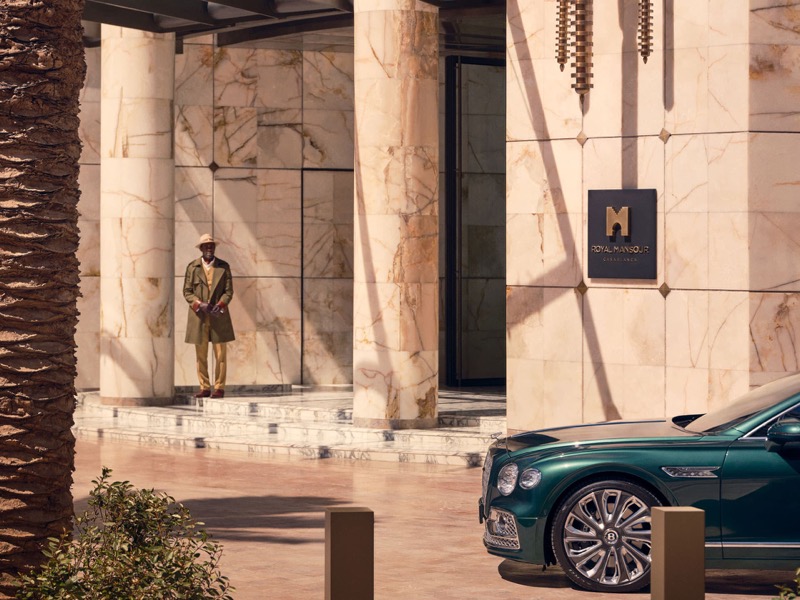
A 1953 Art Deco landmark reborn as an ultra-luxury hotel by the Royal Mansour brand — three restaurants, full spa, and 149 rooms with rooftop views over Casablanca's white rooftops and Hassan II Mosque.
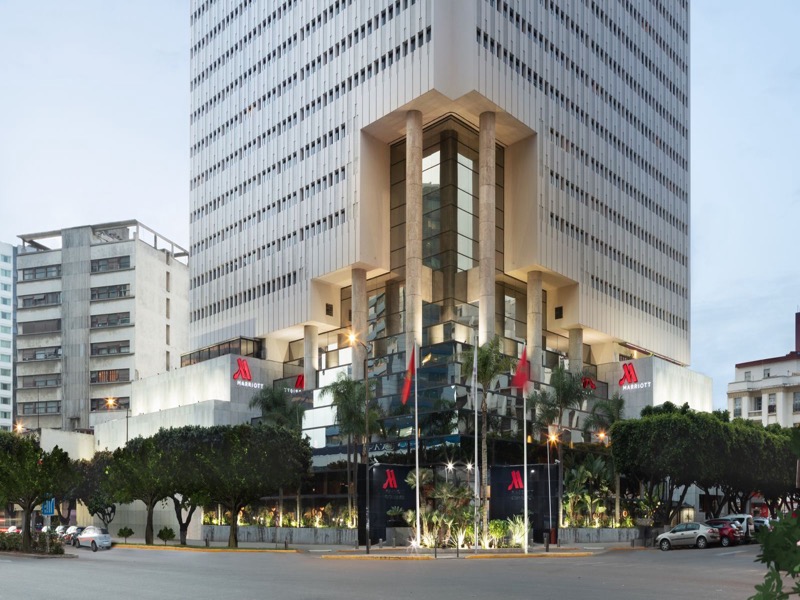
Morocco's top-rated Marriott — a sleek 5-star with a 9.4/10 guest score, stylish rooftop lounge, and exceptional warm hospitality just minutes from the FIFA 2030 Final stadium.
Top 5: 1) Hassan II Mosque guided tour (~130 MAD — non-Muslims welcome, stunning architecture over the Atlantic), 2) Old Medina & Central Market seafood, 3) Corniche beachfront walk + beach clubs, 4) Quartier des Habous (Art Deco, artisan shops), 5) Rick's Café dinner (book ahead). Day trip to Rabat (45 min TGV, 100 MAD return) is highly recommended.
Is Casablanca worth visiting?
Yes — Casablanca is chronically underrated. The Hassan II Mosque alone justifies the visit. The Art Deco architecture is world-class. The Corniche Atlantic seafront is 7km of great restaurants and beach clubs. As the FIFA 2030 Final host city (Grand Stade Hassan II, world's largest stadium at 115,000 capacity), it's set to become Morocco's most globally recognised city.
How many days do I need in Casablanca?
2 nights: Hassan II Mosque, Old Medina, Corniche, Habous Quarter, Rick's Café. 3 nights: add El Jadida day trip (UNESCO Portuguese fort + oysters, 90 min south). For FIFA World Cup 2030: 4–5 nights to attend multiple matches and explore properly.
Is Casablanca safe for tourists?
Yes — Casablanca is generally safe. It's a modern metropolitan city with well-policed tourist areas. Much less hustler pressure than Marrakech's medina. Standard city precautions: use registered (petit) taxis (insist on the meter), be aware in crowded market areas, don't flash valuables. The Corniche, Habous, and Mohammed V Square areas are relaxed and tourist-friendly.
How do I get from Casablanca to the Hassan II Stadium?
The Grand Stade Hassan II is in Benslimane, 30km from central Casablanca. High-speed TGV trains from Casa-Voyageurs station reach the stadium in 15 minutes (when the rail extension opens for 2030). Alternative: taxi (~300 MAD) or matchday shuttle buses. Stay in Casablanca or Benslimane for the easiest stadium access.
We use cookies to improve your experience, analyse traffic, and serve personalised ads via Google AdSense and affiliate partners. By clicking Accept All, you consent to our use of cookies.
Privacy Policy